
Disclosure: This site may contain affiliate links. If you purchase through these links, we may earn a commission at no additional cost to you.
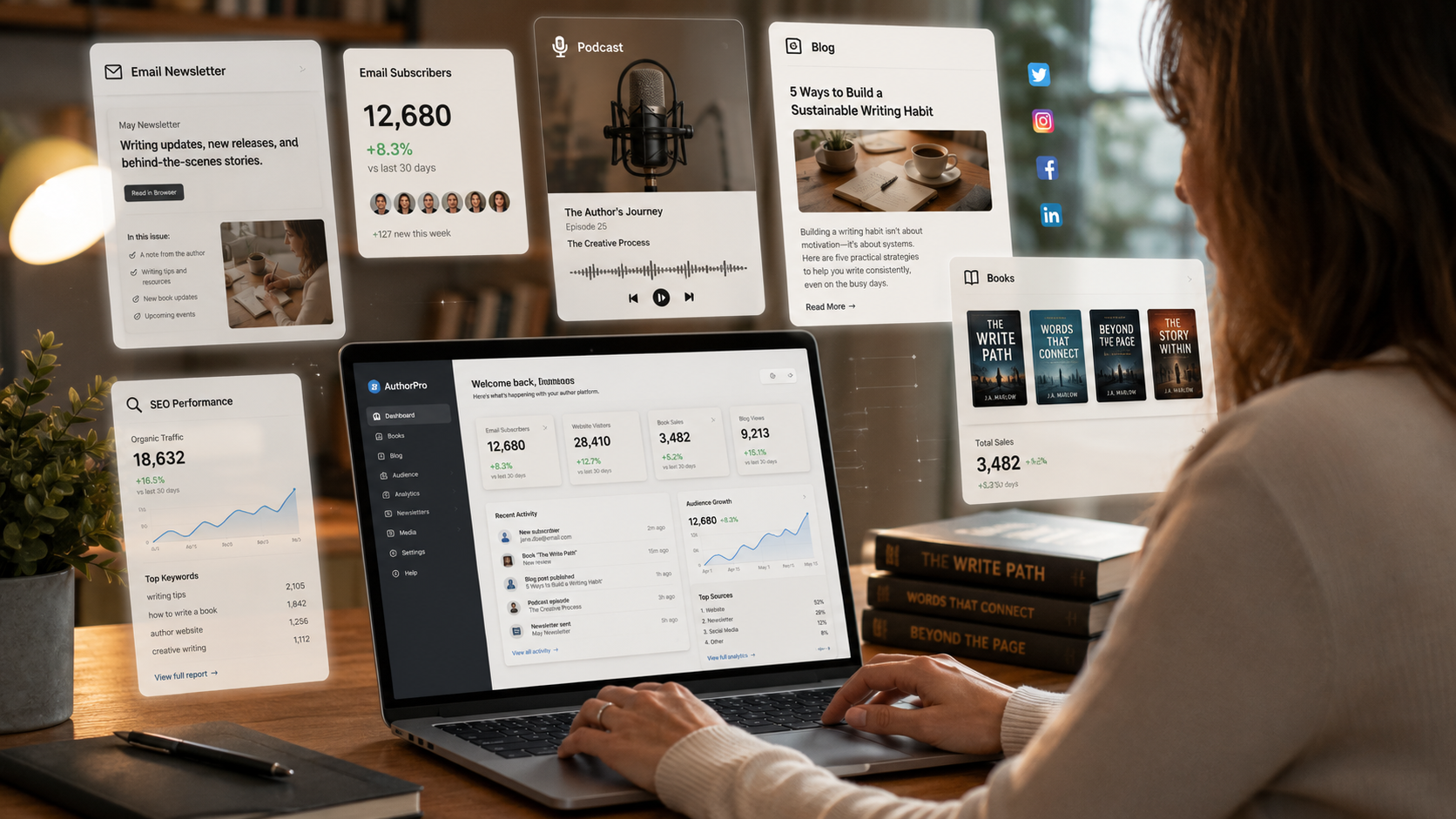
How Authors Can Build a Stronger Online Presence Without Relying Only on Social Media
Social media is loud, crowded, and rented ground. The smartest authors build their online presence on assets they own like websites, email lists, articles, and media placements and use social media as one channel among many, not the whole strategy.
If you asked most authors what "online presence" means, they'd say social media: Instagram, TikTok, Facebook, or X. Post consistently, build a following, and hope the algorithm notices you.
It's not bad advice. It's just dangerously incomplete.
Social media is one piece of an online presence. Treating it as the entire strategy is like building your house on land you don't own. The platform controls the rules. The algorithm controls who sees your content. And both can change without warning, without explanation, and without caring about your book launch next month.
The authors who build the most resilient, effective online presences are the ones who diversify. They use social media, yes, but they also invest in assets they control and channels that don't depend on a single company's algorithm.
Here's how to build a stronger online presence that works for your books whether social media cooperates or not.
Start With an Author Website You Actually Own
Your author’s website is the only piece of digital real estate you fully control. Your domain. Your design. Your content. No algorithm deciding who gets to see it.
Yet many authors either don't have a website or have one that hasn't been updated since their last book release. This is a missed opportunity on multiple levels.
Your website is your home base. Every other online activity, social media posts, podcast interviews, guest articles, email campaigns should point readers back to your website. It's where they go to learn about your books, join your email list, read your blog, and understand who you are as an author.
Your website also builds search authority. Every page is indexed by search engines. Over time, a well-maintained author website with regular content blog posts, book pages, event announcements, and resources accumulate authority and visibility. This allows readers searching for topics related to your books to discover you organically.
What Every Author Website Should Include
A clean homepage that immediately communicates who you are and what you write
Individual pages for each book with descriptions, reviews, and purchase links
An email signup form prominently displayed throughout the site
A blog or articles section with content relevant to your audience
An author bio page with a professional photo and contact information
A media kit page for journalists, podcasters, and event organizers
You don't need a custom-built website costing thousands of dollars. A simple, professional site can be highly effective if it's current, easy to navigate, and designed with readers in mind.
Build an Email List: Your Most Valuable Marketing Asset
If your website is your home base, your email list is your direct line to readers.
No algorithm filters. No pay-to-play reach. When you send an email, it lands directly in your subscriber's inbox.
Email consistently outperforms most social platforms when it comes to driving book sales and reader engagement. More importantly, subscribers have already raised their hands and said they're interested in hearing from you.
Why Email Works for Authors
Subscribers have actively chosen to connect with you
You control the timing, frequency, and content of every message
Email remains effective regardless of changes to social media platforms
Segmentation allows you to tailor messages to specific reader groups
Ways to Grow Your Email List
Offer a reader magnet such as a free short story, bonus chapter, or downloadable guide
Include newsletter signup invitations in your book's front and back matter
Promote your newsletter during podcast interviews and guest appearances
Partner with other authors for newsletter swaps
Participate in reader discovery promotions through services like BookFunnel and StoryOrigin
Even a modest email list of a few hundred engaged readers can outperform a much larger social media following when launching a book.
Publish Articles and Guest Posts That Work for You Long-Term
A social media post may be visible for a few hours. A well-written article can generate traffic for years.
That's the power of evergreen content.
When you publish guest posts, articles, or blog content, those pieces become discoverable through search engines and continue introducing new readers to your work long after publication.
Where Authors Can Publish
Their own website or blog
Genre-specific blogs and reader communities
Medium
Niche publications related to their book topics
Author interview and book review websites
Topics That Attract Readers
Themes related to your books
Your writing process and creative journey
Reading recommendations within your genre
Advice for aspiring writers
Behind-the-scenes research and inspiration
Always include an author bio and website link. Over time, these articles create a network of discovery points that work continuously in the background.
Get Featured on Podcasts and Media Interviews
Podcasts remain one of the most underutilized marketing opportunities for authors.
Unlike quick social media interaction, podcast listeners spend significant time engaging with hosts and guests. This creates deeper connections and stronger audience trust.
The podcast landscape includes:
Genre-specific book podcasts
Writing craft shows
Independent publishing podcasts
Topic-based shows related to your book's subject matter
How to Land Podcast Interviews
Research podcasts relevant to your genre or expertise.
Listen to several episodes before pitching.
Send a concise, personalized pitch.
Focus on the value you'll bring to listeners.
Offer unique discussion angles beyond simply promoting your book.
Follow up professionally if you don't receive a response.
Beyond podcasts, seek opportunities with:
Local newspapers
Online magazines
Literary blogs
YouTube channels
Virtual and in-person literary events
Every appearance creates lasting content that can continue attracting readers long after it's published.
Leverage SEO to Help Readers Find You
Search engine optimization (SEO) may sound technical, but the goal is simple:
When readers search for topics related to your books, can they find you?
If you write historical fiction, your website should appear in searches related to that historical period. If you write nonfiction, readers searching for solutions to problems you address should encounter your content.
Simple SEO Practices for Authors
Use relevant keywords naturally throughout your content
Create blog posts that answer reader questions
Include genre, themes, and comparable titles on book pages
Maintain a fast, mobile-friendly website
Build backlinks through guest posting and media appearances
SEO takes time, but it delivers something incredibly valuable: ongoing traffic from people actively looking for information related to your work.
Use Social Media Strategically, Not Desperately
None of this means abandoning social media.
It means using social media as one part of a larger ecosystem rather than depending on it entirely.
Social media works best when:
You focus on one or two platforms where your readers spend time
You direct followers toward your website and email list
You prioritize genuine engagement over constant posting
You provide value through insights, recommendations, and behind-the-scenes content
You recognize that reach will fluctuate and avoid chasing every algorithm change
Social media should amplify your marketing foundation not become the foundation itself.
Putting It All Together
A strong author platform includes five core components:
1. Website
Your permanent online home.
2. Email List
Your direct relationship with readers.
3. Published Content
Articles, blog posts, and guest contributions that build authority and search visibility.
4. Media Presence
Podcasts, interviews, and features that create lasting discovery opportunities.
5. Social Media
A strategic channel that supports and amplifies your broader marketing efforts.
Each channel reinforces the others. A podcast listener visits your website. A website visitor joins your email list. An email subscriber buys your book and leaves a review. Every touchpoint strengthens the entire ecosystem.
The authors who build lasting careers, not just temporary spikes in visibility, understand this principle. They create diversified online presences that continue working regardless of platform changes or algorithm updates.
Going viral may create a moment. Building owned assets creates a career.
Your online presence should work for you whether social media has a good day or a bad one. Build it that way, and you'll never be completely at the mercy of an algorithm again.

Comments (0)
No comments yet. Be the first!